
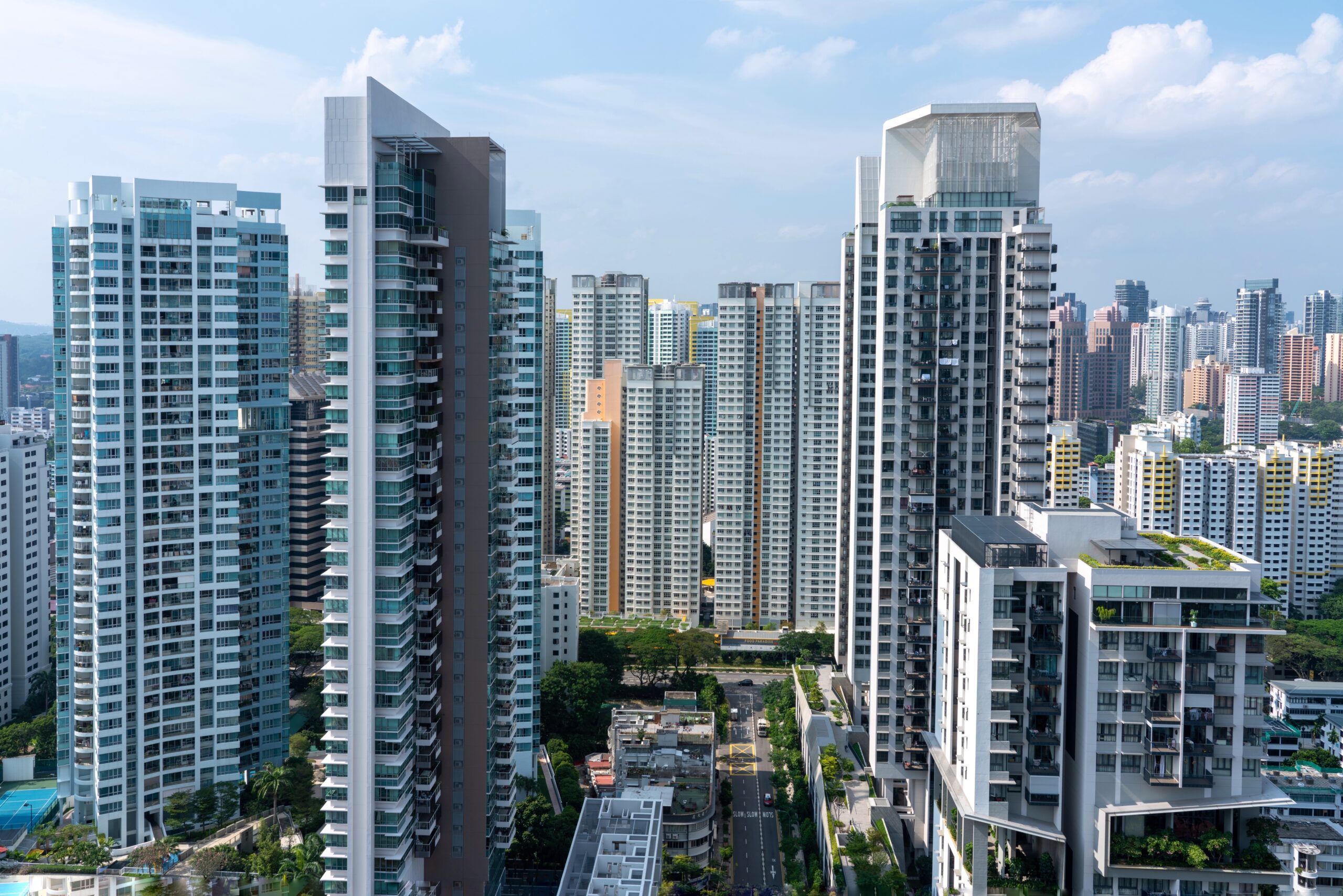
India’s alternative allocation cycle is entering a decisive phase. Over the last 24 months, institutional capital has quietly repositioned itself toward stabilized office assets in gateway cities—particularly Mumbai Metropolitan Region (MMR) and Pune. For HNIs, family offices, and wealth managers seeking scalable exposure without operational complexity, commercial real estate investment in these corridors is no longer a cyclical bet—it is a strategic allocation decision.
What we are witnessing today is not exuberant expansion. It is disciplined accumulation.
Grade A office absorption in MMR and Pune has rebounded sharply post-pandemic, vacancy levels in prime micro-markets are stabilizing, and cap rates remain at a compelling spread over sovereign yields. This creates a narrow window where forward-looking investors can lock in favorable entry points before yield compression resumes.
Against this backdrop, curated AIF platforms such as Integrow’s commercial strategy are enabling access to institutional-quality assets with structured downside protection and defined value-creation pathways.
Why Commercial Real Estate Investment Is Regaining Allocation Priority
Institutional capital does not move based on headlines—it moves on fundamentals.
Three structural shifts are driving renewed conviction in commercial real estate investment:
1. Post-Pandemic Stabilization of Office Demand
The narrative has shifted from “remote-first uncertainty” to “hybrid optimization.” Large IT/ITES, BFSI, GCCs, and consulting tenants are consolidating into premium buildings.
Key trends:
- Flight to quality toward Grade A assets
- Consolidation into efficient, ESG-compliant campuses
- Long-duration leases with credit tenants
- Preference for established micro-markets in MMR and Pune
This demand concentration is reinforcing rental resilience in prime assets while widening the quality gap across asset tiers.
2. Cap Rate Arbitrage vs Fixed Income
Prime office cap rates in top MMR and Pune micro-markets continue to trade at spreads attractive relative to government bonds and high-grade debt instruments.
For HNIs evaluating:
- Debt funds
- Structured credit
- Listed REIT exposure
Direct but curated commercial real estate investment via AIF structures offers:
- Superior risk-adjusted yield
- Value creation upside through active asset management
- Lower correlation to public markets
This is not yield chasing—it is disciplined spread capture.
3. Institutional Tenant Stickiness
Large occupiers signing 5–9 year leases with lock-ins provide:
- Revenue visibility
- Predictable cash flows
- Lower churn risk
When underwriting stabilized Grade A office, tenancy profile becomes the primary risk filter—one of the core pillars of advanced Commercial real estate analysis.
MMR & Pune – The Epicenter of Current Commercial Real Estate Investment
MMR – India’s Financial Command Center
MMR remains the country’s most diversified office ecosystem, with:
- BFSI concentration
- Private equity presence
- Global capability centers
- Media & consulting clusters
Micro-markets such as BKC, Lower Parel, Andheri East, and Navi Mumbai are seeing targeted institutional allocations where:
- Infrastructure upgrades support absorption
- Transit connectivity improves tenant retention
- Limited Grade A supply in select nodes supports rental growth
Pune – The Structural Growth Story
Pune offers a differentiated proposition:
- Strong IT/ITES absorption
- Competitive rentals vs Mumbai
- Deep engineering and manufacturing ecosystem
- Growing GCC presence
For allocators, Pune provides:
- Higher yield entry compared to Mumbai core
- Strong absorption velocity
- Balanced supply pipeline
The city’s office fundamentals are not speculative—they are backed by corporate expansion plans extending into 2026+.
Grade A Office Assets – The Core of Modern Commercial Real Estate Investment
Not all offices are created equal.
Sophisticated capital today concentrates on Grade A assets with:
- Institutional developers
- ESG certifications
- Efficient floor plates
- Blue-chip tenants
Return Potential and Commercial real estate returns
In stabilized Grade A office portfolios across MMR and Pune, investors typically target:
- 8–10% stabilized yield
- 14–18% IRR potential over a structured cycle (subject to execution and market conditions)
- Exit upside via yield compression or institutional take-out
The drivers of Commercial real estate returns include:
- Rental escalation clauses (typically 12–15% every 3 years)
- Vacancy reduction through active leasing
- Asset repositioning
- Operational efficiency improvements
This is where experienced asset management becomes the differentiator—not mere ownership.
Advanced Commercial real estate analysis Framework
For HNIs and wealth managers, underwriting must extend beyond headline yield.
A robust Commercial real estate analysis framework includes:
- Tenant Credit Strength
- Weighted Average Lease Expiry (WALE)
- Micro-Market Supply Pipeline
- Replacement Cost vs Acquisition Cost
- Exit Liquidity Scenarios
- Cap Rate Sensitivity
Institutional AIF structures integrate these variables systematically—mitigating behavioral biases that often affect direct property ownership.
Understanding the Types of commercial real estate in Allocation Strategy
Strategic allocators evaluate Types of commercial real estate based on risk-return alignment:
1. Core (Stabilized Grade A Office)
- Fully leased
- Predictable yield
- Lower volatility
- Institutional exit routes
Ideal for wealth preservation with income.
2. Core-Plus / Value-Add
- Moderate vacancy
- Leasing upside
- Rental mark-to-market potential
Offers enhanced IRR with managed risk.
3. Opportunistic
- Development risk
- Pre-leasing uncertainty
- Market timing sensitivity
Higher return potential but elevated execution risk.
Currently, MMR and Pune present selective core-plus opportunities where disciplined leasing strategies can unlock outsized returns without development risk.
Key Commercial real estate risk factors in MMR & Pune
No allocation discussion is complete without risk calibration.
Primary Commercial real estate risk factors include:
Vacancy Cycles
Oversupply in certain micro-markets can pressure rents. However, supply concentration is uneven—prime corridors remain resilient.
Tenant Concentration Risk
Heavy dependence on a single tenant or sector increases vulnerability. Diversified tenancy is critical.
Interest Rate Sensitivity
Rising rates can expand cap rates temporarily, affecting mark-to-market valuations.
Regulatory & Approval Risk
More relevant in development projects than stabilized acquisitions.
AIF structures with disciplined entry underwriting and professional asset management reduce exposure to these risk vectors.
Commercial real estate market outlook – 2026 and Beyond
The Commercial real estate market outlook for MMR and Pune remains constructive for several structural reasons:
1. GCC Expansion Wave
Global corporations continue to expand India capability centers, with Mumbai and Pune leading location preferences.
2. Infrastructure Catalysts
Metro expansions, trans-harbor connectivity, and ring road upgrades improve accessibility—supporting rental appreciation in emerging nodes.
3. Limited Institutional-Grade Supply in Core Nodes
Prime land scarcity in established micro-markets naturally constrains supply, supporting yield stability.
4. Capital Rotation Toward Alternatives
HNIs and family offices are increasing allocations to alternatives as:
- Public markets exhibit volatility
- Debt yields compress
- Direct ownership complexities deter large-scale deployment
This structural reallocation reinforces demand for curated commercial real estate investment platforms.
The Quiet Accumulation Phase – Why Savvy Investors Are Moving Now
Market inflection points rarely announce themselves.
Today’s environment presents:
- Stabilized leasing velocity
- Still-attractive cap rate spreads
- Institutional tenant demand
- Controlled supply growth
Historically, the best commercial real estate investment outcomes occur when capital enters before broad consensus re-prices assets.
By 2026, if absorption continues at current velocity, yield compression in select MMR and Pune micro-markets could narrow entry spreads significantly.
Structured Access Through Integrow’s Commercial AIF Strategy
For HNIs and wealth managers seeking premium exposure without operational burden, curated AIF structures offer:
- Institutional-grade asset sourcing
- Professional Commercial real estate analysis
- Active leasing and asset management
- Risk diversification across assets
- Defined exit pathways
Integrow’s commercial AIF approach emphasizes:
- Grade A office in high-demand corridors
- Conservative underwriting
- Tenant quality prioritization
- Value creation through disciplined asset management
Rather than speculative development, the focus remains on stabilized and selectively value-add opportunities—balancing Commercial real estate returns with prudent management of Commercial real estate risk factors.
Conclusion – Strategic Commercial Real Estate Investment in a Narrow Window
MMR and Pune are not experiencing a speculative boom. They are undergoing a measured institutional re-rating.
For serious allocators, the question is not whether to consider commercial real estate investment—but how to access it intelligently.
With favorable cap rate dynamics, strengthening absorption, and a supportive Commercial real estate market outlook, current conditions represent a disciplined entry phase.
As alternatives become a larger share of sophisticated portfolios, curated commercial AIF exposure—grounded in rigorous Commercial real estate analysis and proactive risk mitigation—offers a compelling pathway.
The window is open. It may not remain so indefinitely.